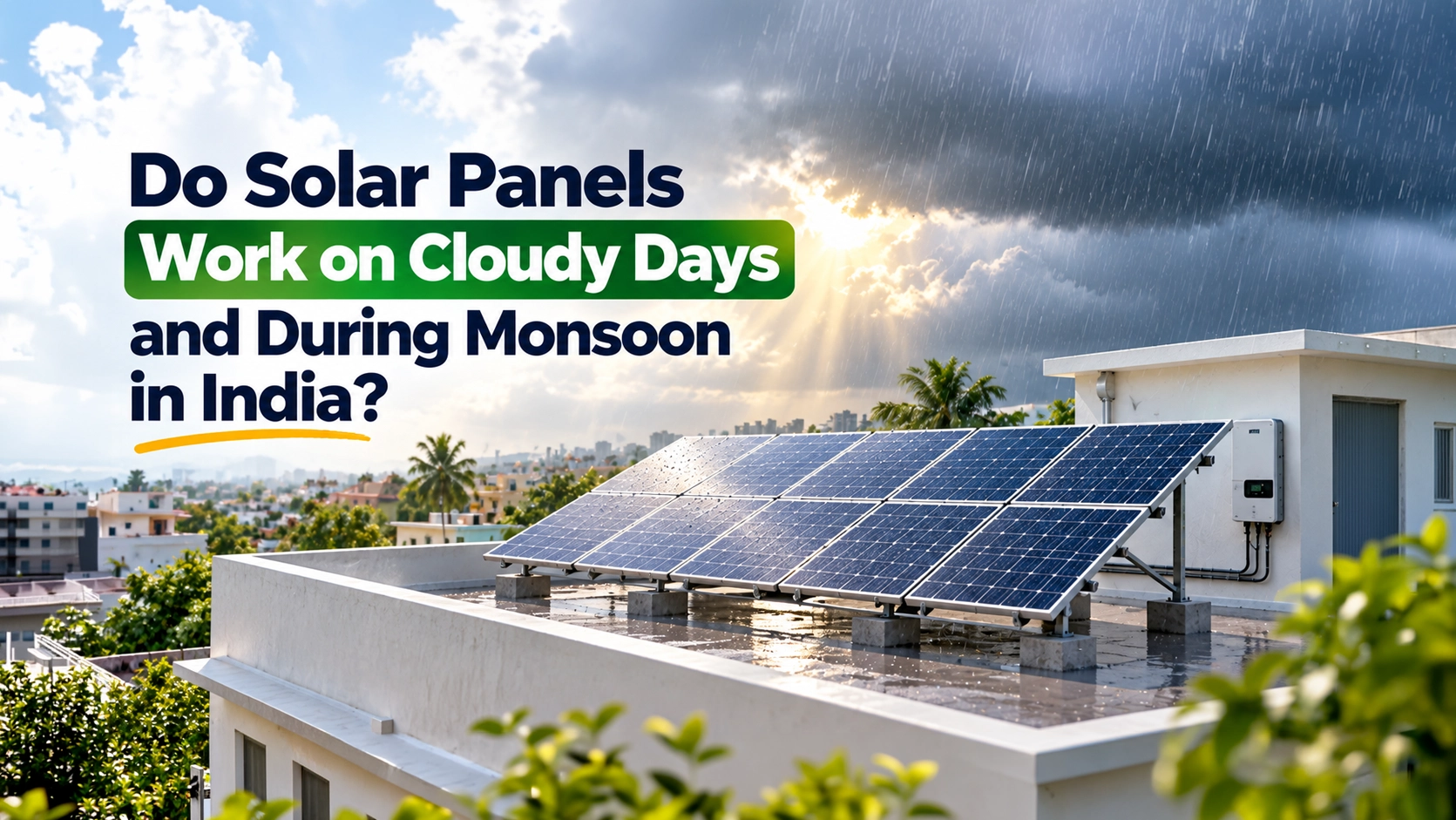
One of the most common questions homeowners ask before installing rooftop solar is, “Do solar panels work on cloudy days in India?” It is a reasonable concern, especially in regions that experience heavy monsoon rains and frequent cloudy weather.
The good news is that solar panels do not stop working just because the sky is cloudy. They can still generate electricity as long as sunlight is reaching the panels. However, the amount of electricity produced can be lower than on a bright, sunny day.
How Do Solar Panels Generate Power on Cloudy Days?
Solar panels use sunlight to generate electricity. They can use both direct sunlight and diffused sunlight that passes through clouds.
On a clear day, panels receive stronger sunlight, allowing them to produce more electricity. When thick clouds cover the sky, less sunlight reaches the panels, so their power output naturally decreases.
This is why solar power generation on cloudy days can vary from one day to another. Light cloud cover may have a relatively small effect, while dark and heavy clouds can reduce generation considerably.
What Happens to Solar Panels During Monsoon?
The Indian monsoon does not mean that rooftop solar becomes useless. Solar panels continue to generate power whenever sufficient sunlight is available.
During the rainy season, generation can fluctuate. You may see good production on a sunny morning, followed by lower generation when clouds become thicker or rain begins.
This variation is normal and should not be considered a sign that the solar system is faulty.
When evaluating solar panel performance during monsoon, it is better to look at generation over several weeks or months instead of judging the system based on one rainy day.
Can Rain Damage Solar Panels?
Solar panels are designed to remain outdoors and operate under different weather conditions. Properly manufactured and installed panels can withstand normal rain and other environmental exposure.
Rain can even help remove some dust from the panel surface. However, good installation is still important. Proper mounting, cable protection, waterproofing and electrical safety measures can help maintain reliable system performance.
How Can You Get Better Solar Performance?
A few simple practices can help maintain your rooftop solar system:
- Keep panels reasonably clean.
- Remove heavy dirt or bird droppings when required.
- Avoid unnecessary shade from trees or nearby structures.
- Check the system regularly through monitoring software.
- Use reliable panels, inverters and other components.
- Get professional maintenance if you notice unusual drops in generation.
Remember that solar generation naturally changes with weather, season and sunlight availability.
Should You Install Solar If Your Area Gets Heavy Rain?
Yes. Living in a region with a strong monsoon does not automatically make rooftop solar unsuitable.
The important factors include your location, roof orientation, available sunlight, system size, shading and expected annual electricity consumption.
Instead of asking whether your panels will produce the same amount of electricity every day, it is better to consider the system’s overall yearly energy generation.
So, do solar panels work on cloudy days in India? Yes, they do. They can continue producing electricity from the sunlight available through the clouds, although their output may be lower during heavy cloud cover.
Monsoon weather is simply one of the natural factors that can affect solar generation. With proper system design, quality components and regular monitoring, rooftop solar can continue generating clean electricity throughout the year.
If you are considering solar for your home, don’t let cloudy weather alone stop you from exploring the option. A professional site assessment can help you understand the expected solar generation for your location and roof.