
Net Metering for Rooftop Solar: How Does It Work?
Installing rooftop solar can help reduce dependence on electricity purchased from the grid. But what happens when your solar panels generate more electricity than your home needs?
This is where net metering for rooftop solar becomes important.
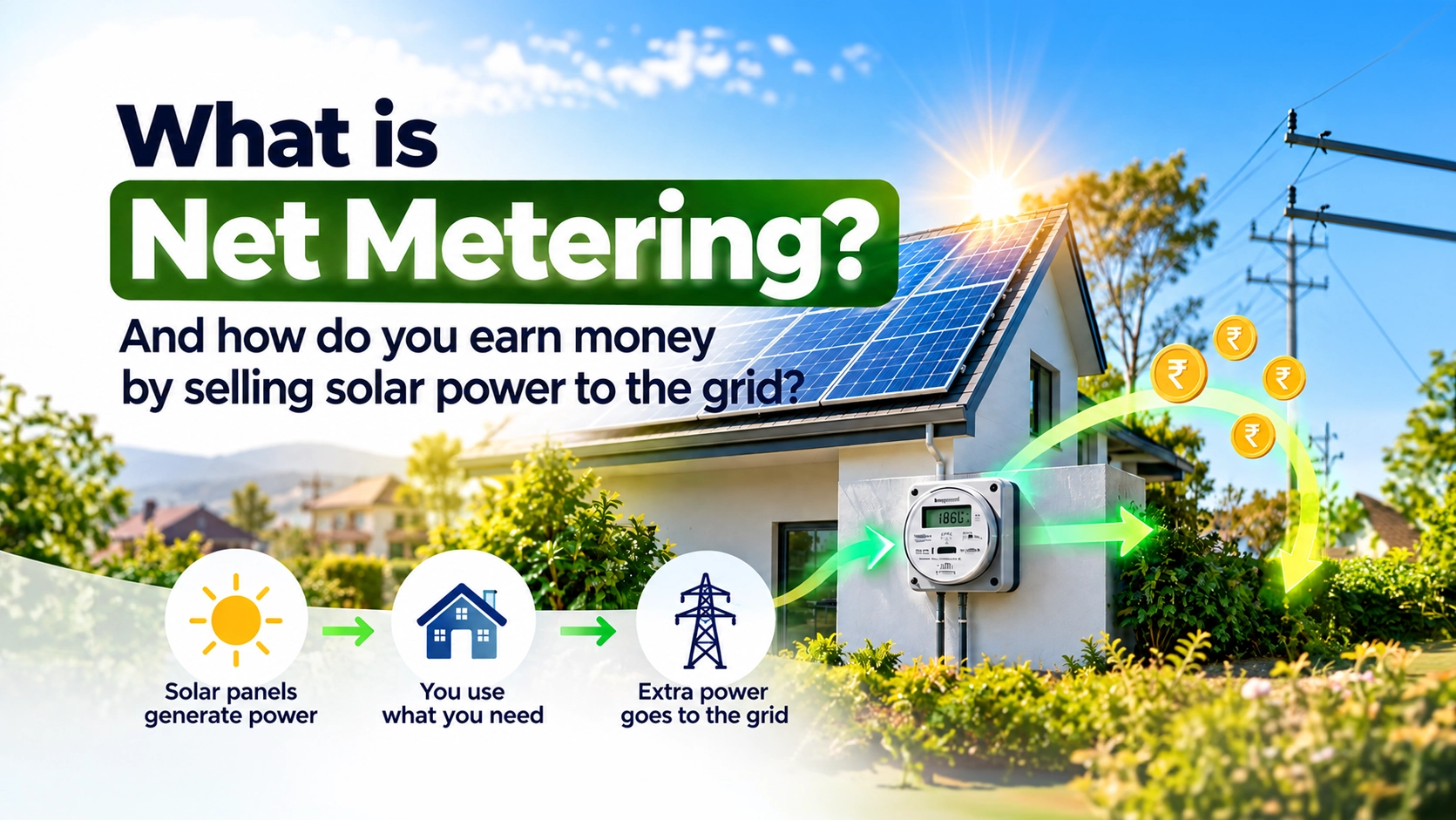
Net metering allows electricity generated by a grid-connected rooftop solar system to be used within the property, while surplus generation can be exported to the electricity grid according to the applicable rules. The exported and imported electricity is recorded through an approved bidirectional meter and is considered in the applicable billing or settlement process.
What Is Solar Net Metering?
Solar net metering is a mechanism through which electricity flowing between a rooftop solar system and the electricity grid is measured.
During the daytime, solar panels generate electricity. The generated power is first used by appliances in the home. If more electricity is produced than is being consumed at that moment, the surplus may be sent to the grid.
When solar generation is not enough to meet the property’s electricity requirement, additional electricity can be drawn from the grid.
This means that the grid can effectively support the rooftop solar system when electricity production and consumption do not occur at the same time.
What Happens to Excess Solar Electricity?
Imagine that your rooftop solar system is producing 5 units of electricity while your home is using only 3 units.
The additional 2 units can be exported to the grid, subject to the applicable net-metering regulations and technical requirements.
Later, when your solar system is producing less electricity than your home requires, electricity can be imported from the grid.
The energy flowing in both directions is measured by the appropriate meter.
This helps ensure that your solar generation and electricity consumption can be properly accounted for.
Do You Get Paid for Selling Solar Power?
The phrase “selling solar power” can sometimes create confusion.
Under a net-metering arrangement, surplus electricity is not necessarily paid to the consumer as direct cash for every exported unit. Instead, the applicable billing or energy-settlement mechanism determines how exported electricity is treated.
The actual benefit depends on the regulations followed by the concerned state electricity authority and DISCOM.
Therefore, homeowners should check the latest local rules before deciding how large their solar system should be.
How Can Net Metering Reduce Your Electricity Bill?
One of the biggest advantages of net metering for rooftop solar is the potential reduction in electricity purchased from the grid.
For example, assume a home consumes electricity throughout the month while its rooftop solar system generates a significant portion of that requirement.
During sunny periods, solar electricity can be consumed directly by household appliances. Any eligible surplus can be exported to the grid. When solar generation is unavailable or insufficient, electricity can be imported.
As a result, the amount of grid electricity used can be reduced.
The actual savings will depend on factors such as system capacity, electricity consumption, sunlight availability, tariff structure and applicable net-metering rules.
How Does PM Surya Ghar Subsidy Help?
For eligible residential consumers, the PM Surya Ghar: Muft Bijli Yojana provides Central Financial Assistance for qualifying rooftop solar installations, subject to the scheme’s applicable conditions and guidelines.
The subsidy can help reduce the initial investment required for an eligible solar system.
When government financial assistance is combined with long-term electricity bill savings, rooftop solar can become a more attractive option for eligible households.
However, subsidy eligibility and net-metering approval should be considered separately because different requirements and processes may apply.
Why Is Proper Solar System Sizing Important?
A solar system should not simply be selected based on the largest possible capacity.
The system should be designed after considering:
- Monthly electricity consumption
- Electricity tariff
- Available roof area
- Roof orientation and shading
- Local sunlight conditions
- Expected solar generation
- Net-metering regulations
- DISCOM requirements
- Eligible subsidy
- Future electricity requirements
A professional site assessment can be used to determine a suitable system size and installation approach.
Is Net Metering Suitable for Every Solar Customer?
Not necessarily.
The availability, capacity limits, application process, technical requirements and settlement mechanism can differ between states and electricity distribution companies.
For this reason, the applicable DISCOM rules should be checked before installation.
Customers should also understand whether their proposed system qualifies for the relevant metering arrangement and government incentives.
Net metering for rooftop solar provides an important connection between your solar installation, household electricity consumption and the power grid.
Instead of allowing surplus daytime generation to go unused, eligible excess electricity can be exported to the grid and accounted for according to the applicable rules.
Combined with proper solar system design and eligible government support such as the PM Surya Ghar scheme, rooftop solar can help households work towards lower electricity expenses over the long term.
Before installing a system, always verify the latest subsidy, tariff, metering and DISCOM requirements applicable to your location.